I suppose there is no logic to be found in this world. It’s like standing in the wilderness waiting for rain all night, only to find the break of dawn bringing nothing but a dry wind—lashing your face with sand. You cannot explain the meaning of the wait, nor the origin of the wind. Everything is imbued with a rootless absurdity.
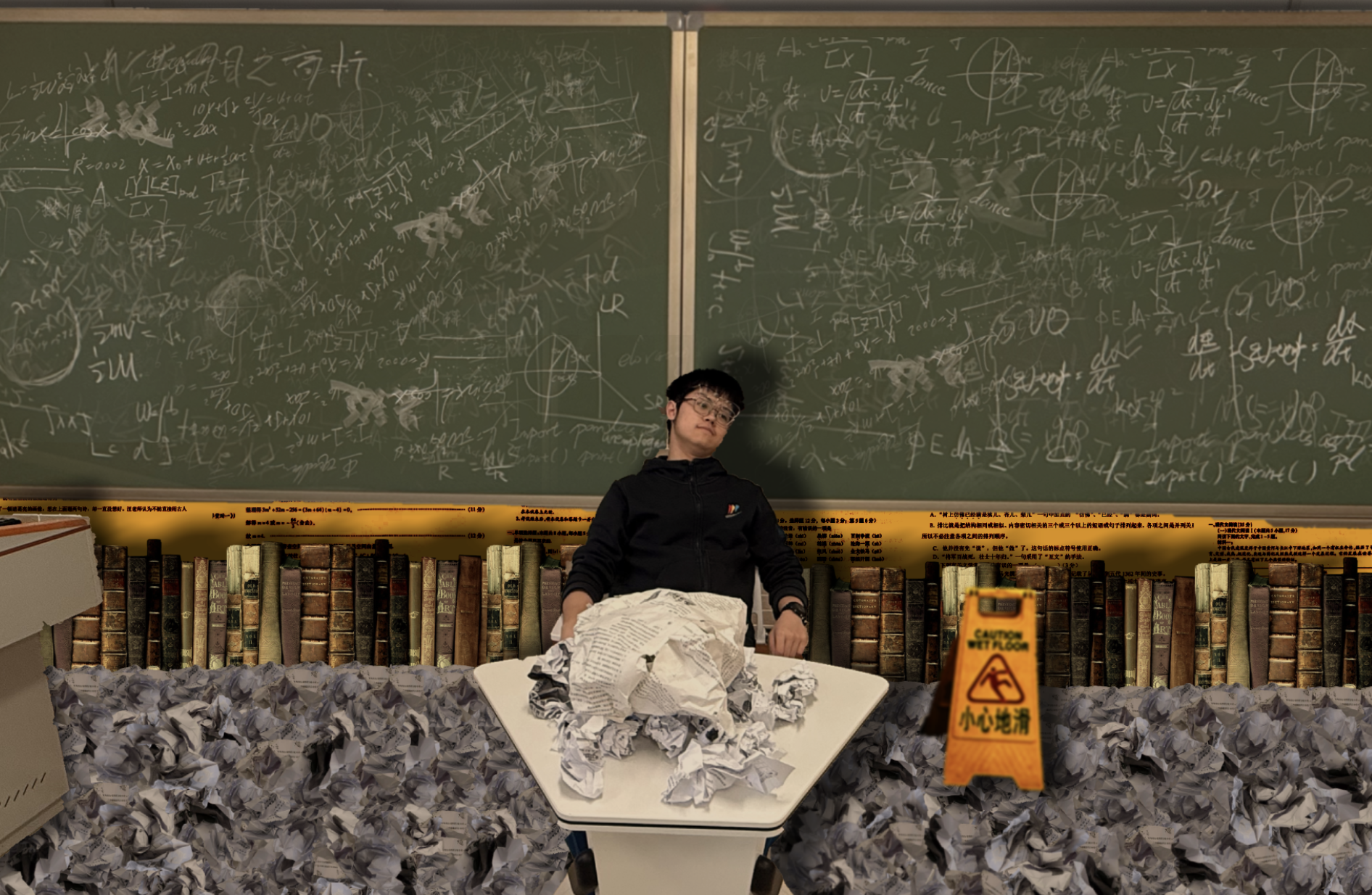
Under the weight of piles of books, endless assignments, and cascading life expectations, we are layered in the pressures of study and life. In the exhaustion of late-night cramming and the blur of the future, absurdity strikes unexpectedly: the direction we strive toward seems to lose its gravity, and those tasks once deemed "essential" suddenly feel weightless.
It is silent, like a shadow stuck to your sole, like dust on your collar. You brush it off, you rub it away, but it never leaves. It follows you through crowded markets as you haggle over pennies; it sits with you in office cubicles as you type inconsequential words; it even crawls into bed with you, whispering that nothing you do has a definitive reason to be so.
All meaning is self-imposed; the world is absurd from start to finish.
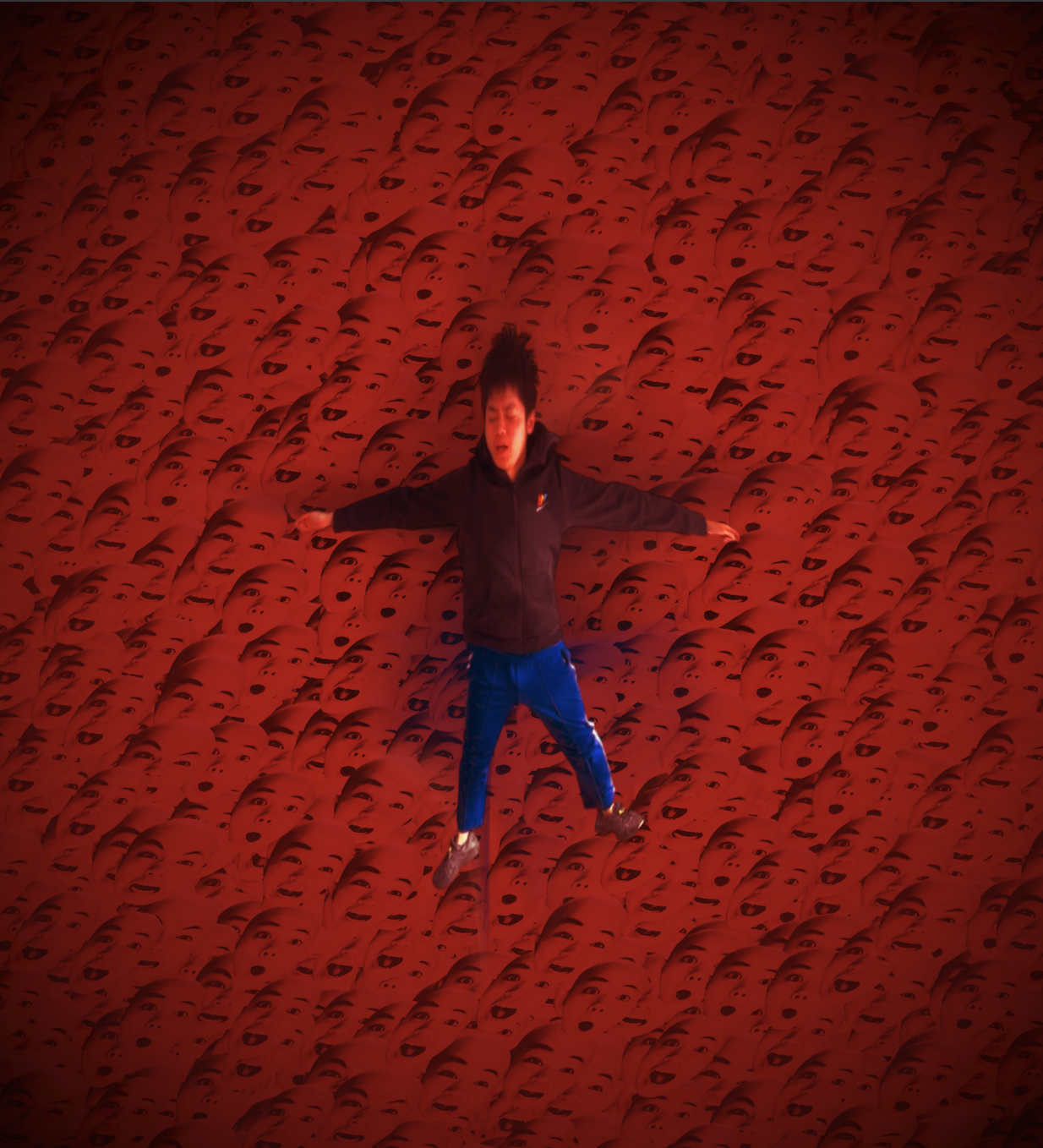
An individual suspended in crimson, surrounded by a dense web of faces. This is the ultimate metaphor for modern existence: the more we seek our own rhythm, the more we fall into the absurdity of being scrutinized. We are besieged by external expectations even as we try to hold onto ourselves.
“In the clamor of a thousand stares, individual alienation is magnified. How are we to exist?”
“Absurdity is not a unique emotion of modern society, but a universal spiritual theme spanning thousands of years. From Sisyphus’ eternal toil in ancient Greece to Shakespeare’s 'To be, or not to be' in Hamlet; from Kafka’s alienation in The Metamorphosis to Camus’ cold world in The Stranger and Beckett’s Waiting for Godot—these classics prove that absurdity is the common clarity and predicament of humanity facing the world.”
WE SHOULD ALL BE AWARE OF THE ABSURD
The absurdity of the world is the background of existence. If one asks "what is absurdity," modern art’s fractures are the most direct footnote.
Impressionism pioneered the breaking of the shackles of "reality." Before it, the canvas was a precise reproduction of the world, with clear outlines and logical consistency, much like the order and meaning people firmly believed in. But the light and shadow in Monet's paintings are fluid; the same church appears completely different at different times—what we perceive as "objectivity" is merely wishful thinking from a subjective perspective. This is the budding of absurdity: so-called certainty is inherently a human construct. Fauvism used intense colors and rough lines to transform absurdity into a straightforward rebellion; Cubism dismantled objects to expose a fragmented world.
Dadaism tore off the mask entirely, declaring all meaning artificial, while Existentialism asked: "How do we live in a meaningless world?"
From canvas to philosophy, absurdity is never a bizarre accident, but the inevitable truth we encounter when facing the world as it is.
The Budding of Absurdity, Breaking the Shackles of Objective Reality
Impressionism pioneered the breaking of the shackles of "reality." Before it, the canvas was a precise reproduction of the world, with clear outlines and logical consistency, much like the order and meaning people firmly believed in. But the light and shadow in Monet's paintings are fluid; the same church appears completely different at different times—what we perceive as "objectivity" is merely wishful thinking from a subjective perspective. This is the budding of absurdity: so-called certainty is inherently a human construct.
Returning to Instinct, Confronting the Chaotic Essence of the World
Primitivism, with its direct, instinctive, and illogical artistic expression, broke free from the shackles of civilization's rules, allowing art to return to its purest form of perception. It revealed another core of absurdity: the civilized order constructed by humanity is merely a shell of self-comfort; the essence of the world is inherently chaotic and disordered, and rational interpretation is nothing but wishful thinking.
The Starting Point of Modern Absurdity, the Collapse of the Predetermined Framework of Meaning
When Nietzsche proclaimed "God is dead," he declared the collapse of the traditional value system and ultimate meaning, which became the core source of modern absurdity. The world no longer has pre-set standard answers, nor does it possess any transcendental power to imbue existence with meaning. Humans must face a meaningless world alone and bear the responsibility of creating value; this "loneliness" is a significant source of the sense of absurdity.
Fragmented Reality, No Single Answer to the World
Cubism simply disassembles and reassembles objects, presenting multiple perspectives of the same thing simultaneously, completely shattering the perception of a "single reality." It intuitively interprets absurdity: the world is never regular or fully comprehensible; everything we see is merely fragments of reality. Attempting to define the world with a single perspective is itself an absurdity.
The Collapse of Order, a Dual Rebellion of Spirit and Form
Futurism celebrates speed, machinery, and dramatic changes of the times, breaking down the temporal and spatial boundaries of traditional art and declaring the complete failure of the old order. Kandinsky led art towards pure form and spirituality, directly expressing emotions through color and line, breaking free from the constraints of figurative reality. Both point to the same conclusion: the accelerated changes of the times render established rules meaningless, the world enters a state of no center and no absolutes, and absurdity becomes an inevitable experience of the era.
The Misalignment of Ideal and Reality, the Absurd Cracks in Grand Narratives
Soviet aesthetics, centered on collective will, grand narratives, and idealism, constructs a lofty pursuit of values. However, when this ultimate ideal collides with cold reality, an irreconcilable misalignment and alienation arise. This is the absurdity at the level of reality: when the framework of lofty meaning cannot match real life, all persistence and striving become empty and helpless.
The Complete Outburst of Absurdity, Deconstructing All Man-Made Meaning
Fauvism used intense colors and rough lines to transform absurdity into a straightforward rebellion; Dadaism, on the other hand, completely tore away the veil of absurdity, with collages of newspapers and random graffiti declaring that all meaning is an artificial addition. Duchamp went further, using a urinal to subvert the boundaries of art, questioning the established definition of "art," and telling us that everything revered as "truth" or "rule" can be deconstructed, and the construction of meaning is inherently an absurd game.
Confronting Absurdity, Upholding Survival in Meaninglessness
Existentialism embraced the nihilism of Dadaism, while Camus became the core representative of confronting absurdity. In The Stranger and The Myth of Sisyphus, he stated directly: the world is indifferent, and life has no inherent meaning; this is the essence of absurdity. However, he did not advocate passivity, but rather proposed "resisting absurdity"—like Sisyphus pushing the boulder uphill, knowing it was futile, yet persisting nonetheless. This proactive perseverance is the most powerful response to absurdity.
Existence Precedes Essence, Freedom is the Core of Combating Absurdity
Sartre's "existence precedes essence" provides the core idea for combating absurdity: humans have no predetermined trajectory or essence; human meaning is created by one's own choices and actions. The meaninglessness of the world is a given fact, but humans possess absolute freedom to define themselves and create value. This freedom becomes the only weapon against absurdity.
Unlocking Irrationality, Reason Cannot Explain All Reality
Surrealism delves into the realms of the subconscious, dreams, and irrationality, allowing reality and fantasy to overlap, completely shattering the dominance of reason. It reveals the profound experience of absurdity: human reason is limited and cannot explain the entirety of the world's truth. We live in the gap between reason and irrationality; this limitation of cognition is itself a kind of absurdity.
Responding to Absurdity with Emotion, the World Can Only Be Felt, Not Depicted
Abstract Expressionism abandons all figurative forms, creating with pure emotion, impulse, and brushstrokes, making art a direct expression of inner feelings. It interprets the expressive dilemma of absurdity: the absurd nature of the world cannot be figuratively depicted, nor rationally explained; it can only be felt and responded to with the most authentic emotions.
The Diluted Meaning, the Everyday is Absurd
Pop Art brings everyday consumption, popular culture, and mass-produced symbols to the art stage, breaking down the boundaries between highbrow and popular. It brings absurdity into daily life: in the age of consumerism, everything can become a symbol, and the original profound meaning is constantly diluted; the seemingly vibrant daily life is actually full of meaningless absurdity.
The Dissolution of Absurdity, Making Life the Essence of Resistance
Fluxus, with a relaxed attitude of "whatever," integrates improvisation, chance, and everyday life into art, declaring that "life itself is art." It offers a completely new approach to dealing with absurdity: instead of clinging to deconstruction or resistance, one can step outside the framework of meaning, face the world with a casual and free attitude, and dissolve the heaviness brought by absurdity in the improvisation and reality of life.
Awareness of the absurd is the awareness of aesthetics.
After seeing the meaninglessness of the world, how do we face it?
Duchamp's rebellion tells us that the antidote is never blind conformity, but the courage to say "no" to the taken-for-granted. Camus’ Sisyphus finds light in daily struggle. Sartre reminds us that freedom is our only weapon. The Fluxus movement shows us how to dissolve weight through improvisation and play.
This is the way of survival in the wasteland of nihilism:
Do not ask for the world’s meaning. Instead, use doubt as your axe, rebellion as your fire, and freedom as your path to create your own aesthetics of survival.

These collages use broken architecture and restructured spaces to juxtapose chaos and reconstruction. Classical sculptures placed among scaffolding symbolize the collapse of old meaning, while the interweaving of figures shows the persistent struggle and self-rebuilding that exists within the mess.
Confronting the absurd is not about returning to wholeness, but rebuilding the self within the chaos.
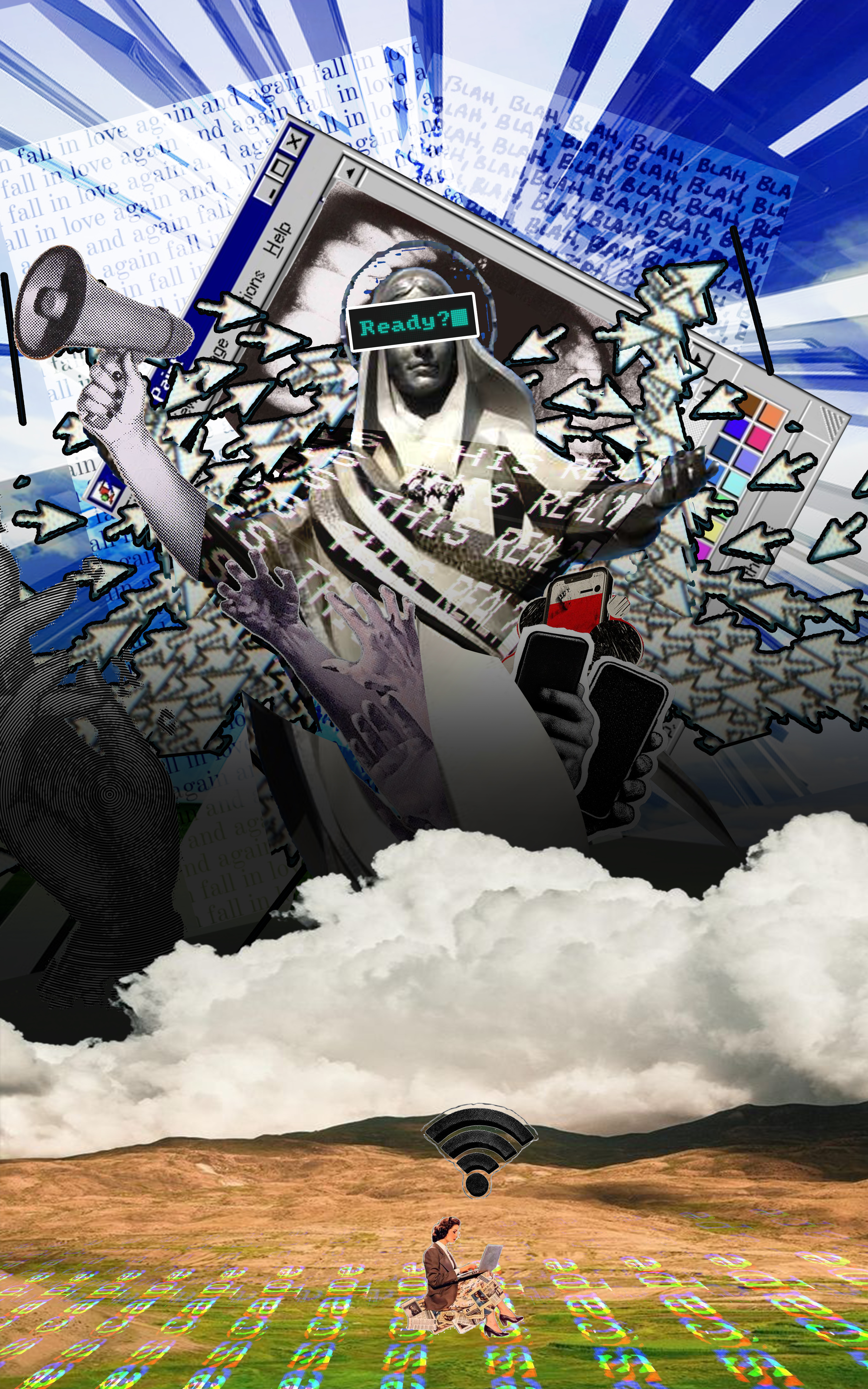
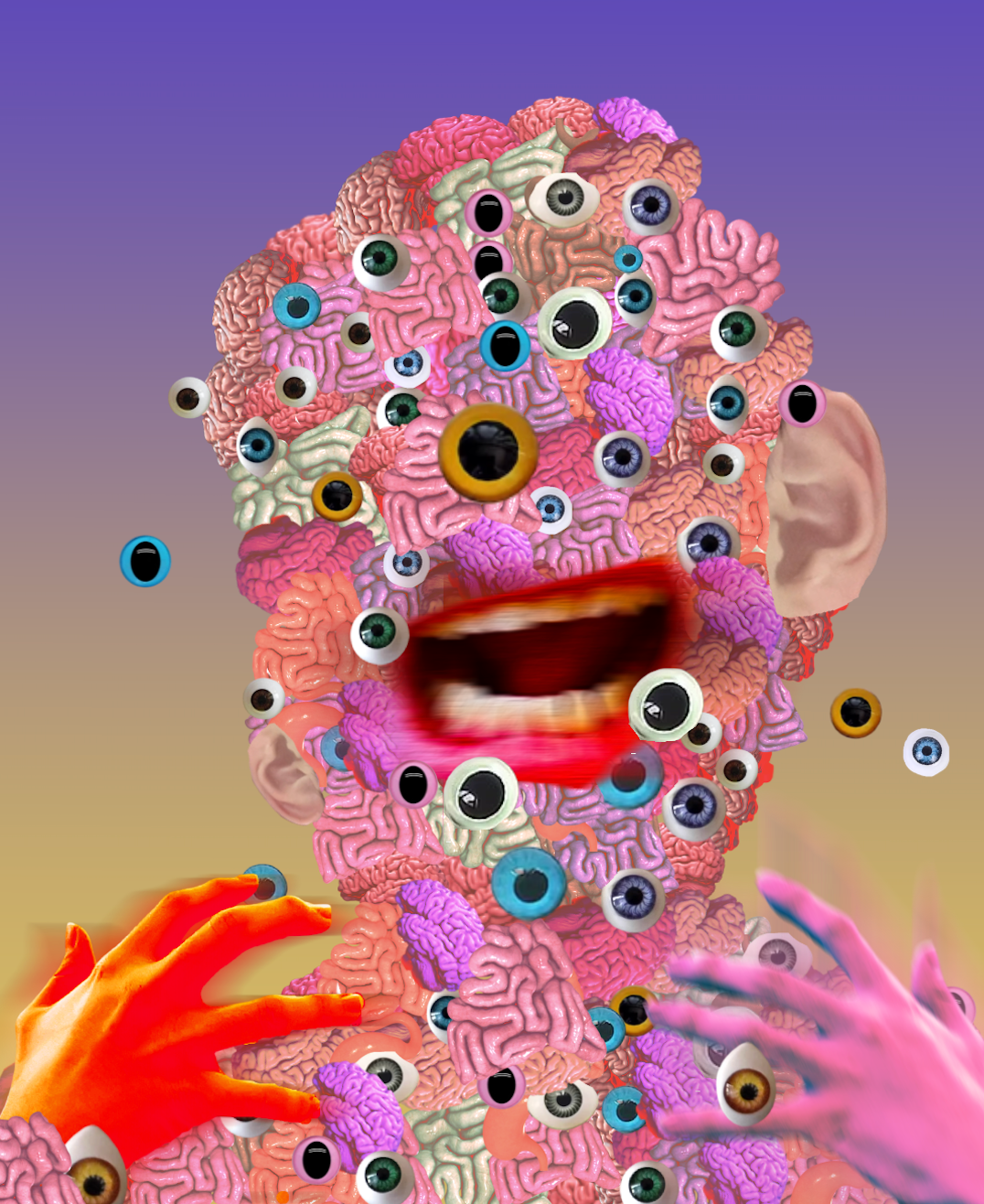
This work uses a surreal combination of brain, eyes, and organs to present a visual metaphor that perfectly echoes the theme. It symbolizes how we are over-thinking and over-scrutinized in an information-overloaded world; the open mouth suggests the dilemma of expression and the nakedness of existence.
Confronting absurdity means keeping your eyes open; not to clear the mess, but to choose to think and exist within it.
“This is the simplest and firmest posture against the absurd:
To stay conscious in chaos, to keep watching in brokenness,
and to still choose living and thinking in an absurd world.”